
End-to-End Process Flow
This flow diagram illustrates the end-to-end lifecycle of a B2C corporate salary transaction, from salary instruction submission to final payout delivery. It highlights the key integration steps, validation checks, and routing process within the IC platform. Developers can use this as a reference for understanding how transactions are processed through the V2 API framework.
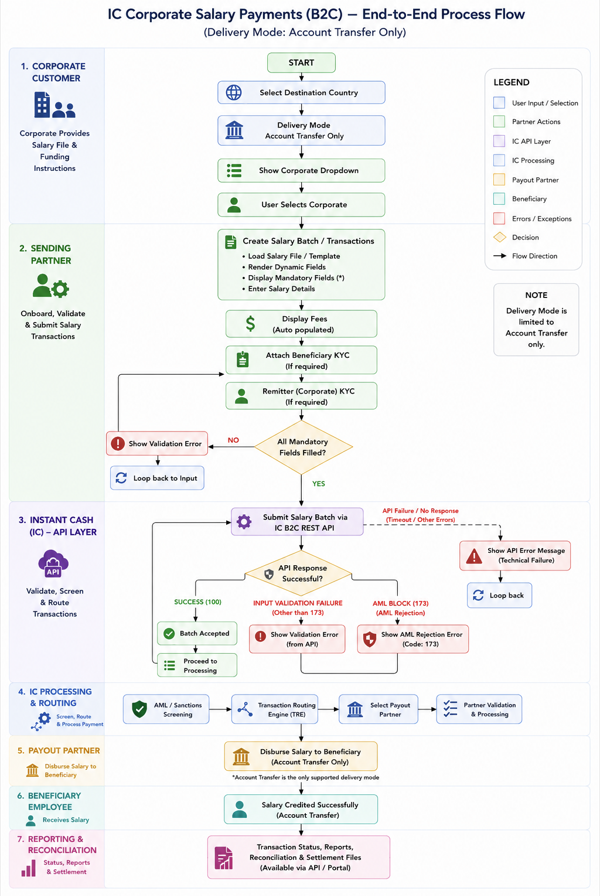
Phase 1 – Corporate Onboarding:
Responsibility: Sending Partner
- Onboards the corporate customer onto the platform.
- Performs corporate KYC, due diligence, and compliance verification.
- Obtains necessary approvals and activates the corporate profile.
- Establishes salary processing agreement and funding arrangements.
Phase 2 – Salary Transaction Creation:
Responsibility: Sending Partner
- Prepares and validates employee salary payment instructions.
- Constructs transaction payloads including:
- Corporate (Remitter) details.
- Employee (Beneficiary) details.
- Salary amount and currency.
- Destination corridor and delivery mode (The countries currently supported are India, Bangladesh, Nepal, and the Philippines. Delivery mode should be '04-Account Transfer to Other Bank').
- Remittance Relationship should be "Employer".
- Source of Fund should be "Salary".
- Purpose of Transaction should be "Employee Compensation".
- Submits transactions to IC via B2C REST API (V2).
Phase 3 – IC Validation & Compliance:
Responsibility: IC
- Performs structural and business-level validations on incoming transactions.
- Verifies beneficiary and payout details against corridor requirements.
- Executes compliance checks including:
- AML screening
- Sanctions filtering
- Watchlist validation
- Determines transaction outcome (accept/reject) based on validation results.
Phase 4 – Salary Disbursement:
Responsibility: IC / Payout Partner
- Routes approved transactions through the optimal payout channel.
- Processes salary disbursement via bank, wallet, or cash partner.
- Ensures successful credit to beneficiary accounts.
Phase 5 – Status & Reporting:
Responsibility: IC
- Provides transaction status updates via API and/or event notifications.
- Communicates success and rejection outcomes.
- Enables reconciliation through reporting and settlement data.
Updated 2 months ago
Did this page help you?